

Albertans continue to feel the pinch of steadily increasing costs of living and a wage scale that isn’t keeping pace. What was once called the Alberta Advantage is now more of a disadvantage according to the Alberta Federation of Labour in yesterday’s report released by economist Dr. Jim Stanford.
The report shows that average wages in Alberta fell behind Quebec in 2024 after falling behind BC in 2023. This is part of a trend that has been taking place since 2013 where the province once held a 17% advantage over the rest of the country for wages. This has now been reduced to just 1.7% higher in 2024. Alberta’s rapidly growing cost of living, skyrocketing rental rates and a booming real estate industry has reduced the buying power of the average family significantly.
“Once a promising place for workers to find jobs, earn decent wages, and support their families, Alberta has more recently demonstrated among the weakest labour markets in Canada,” reads the report. “Unemployment is relatively high, wage growth has been far below other provinces, and yet the cost of living is among the highest in Canada.” Dr Jim Stanford – Alberta Federation of Labour
The report doesn’t hold back it’s criticism of the UPC government citing that Since 2019, when the UCP government came to power, actual hourly wages in Alberta have fallen by a cumulative total of 4.5%, by far the worst of any province in the country including the Maritimes region.
Real Wages and Buying Power Hitting Albertans in the Pocketbooks
The decline in real wages has been experienced across the board and in almost every sector where even the highly profitable petroleum and mining sector has seen wages stagnate for several years now. Average hourly wages in Alberta grew 2.2% in 2024, the third slowest of any province, and barely half the national average (3.8%).
Complicating the matter is that Alberta also experienced the highest inflation of any province in 2024: 2.9%, which is from an economic stand point, significantly higher than the national average (2.2%).
| Province | Annual Inflation Rate (2024) |
|---|---|
| Alberta | 2.9% |
| British Columbia | 2.6% |
| Ontario | 2.4% |
| New Brunswick | 1.8% |
| Quebec | 1.6% |
| Manitoba | 1.1% |
| Nova Scotia | 0.9% |
| Newfoundland and Labrador | 0.6% |
| Prince Edward Island | 0.4% |
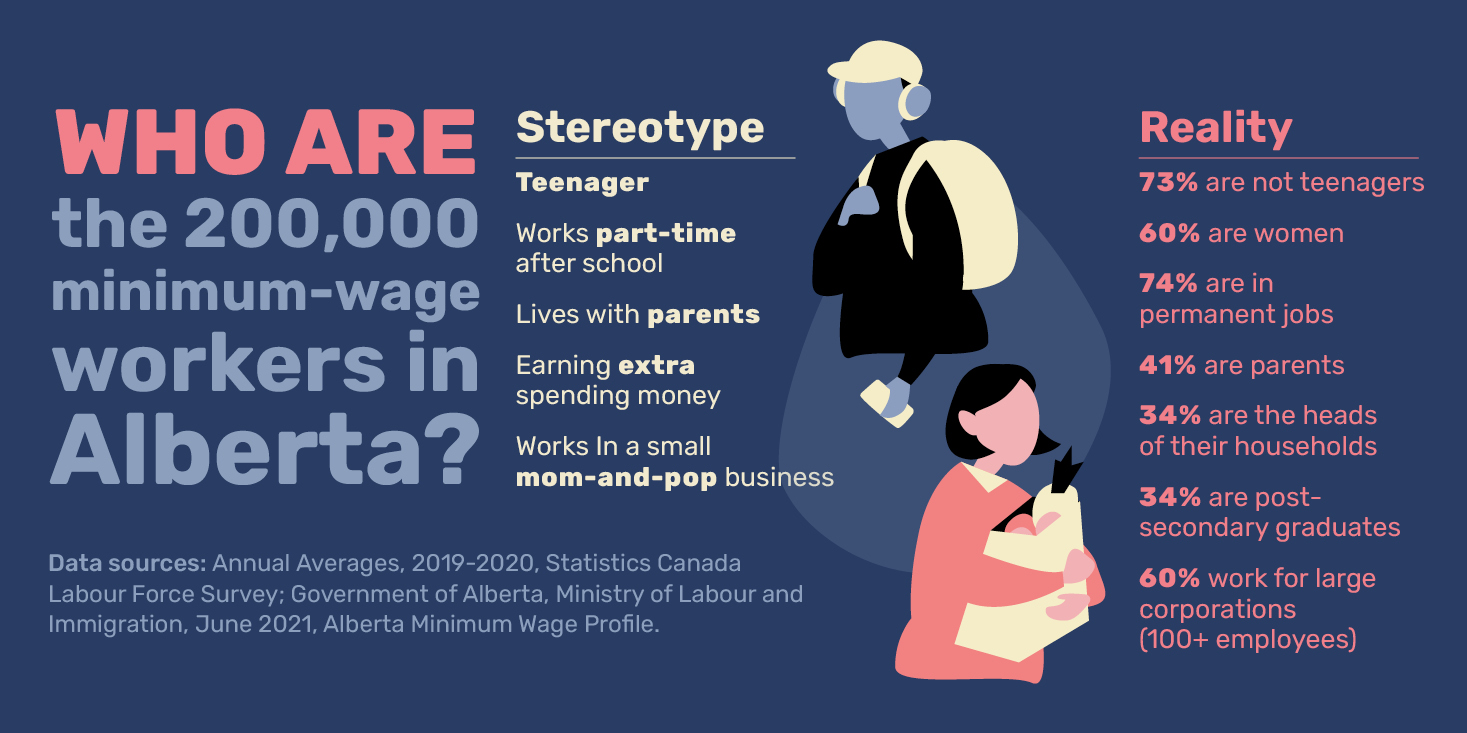
For employees paid by the hour, real wages fell another 0.8% in 2024 – adding to a decade-long decline in real wages (dating back to 2013) that has cut living standards and buying power in Alberta by over 10% for hourly workers who last saw the minimum wage rate go up in October of 2018.
| Province/Territory | Current Minimum Wage | Date of Last Increase | Next Increase Date |
|---|---|---|---|
| Alberta | $15.00 | October 1, 2018 | To be determined |
| British Columbia | $17.40 | June 1, 2024 | June 1, 2025 |
| Manitoba | $15.80 | October 1, 2024 | October 1, 2025 |
| New Brunswick | $15.30 | April 1, 2024 | April 1, 2025 |
| Newfoundland & Labrador | $15.60 | April 1, 2024 | April 1, 2025 |
| Northwest Territories | $16.70 | September 1, 2024 | To be determined |
| Nova Scotia | $15.20 | April 1, 2024 | April 1, 2025 |
| Nunavut | $19.00 | January 1, 2024 | To be determined |
| Ontario | $17.20 | October 1, 2024 | October 1, 2025 |
| Prince Edward Island | $16.00 | October 1, 2024 | October 1, 2025 |
| Quebec | $15.75 | May 1, 2024 | May 1, 2025 |
| Saskatchewan | $15.00 | October 1, 2024 | October 1, 2025 |
| Yukon | $17.59 | April 1, 2024 | April 1, 2025 |
Rental Rates Disproportionate to Provincial Wages
While hourly wages have not kept pace with the rate of inflation or the National average – Alberta’s rental market saw a significant increase in average rents for 2024, outpacing many other regions in Canada.
According to the June 2024 report from Urbanation and Rentals.ca, Alberta experienced a 17.5% year-over-year increase in average listed rent prices, bringing the provincial average to $1,787 as of May 2024. In comparison, the National average saw rents decrease 3.2% including rents in Toronto and Vancouver.
In comparison though, Alberta still has some of the most affordable rents in the country with the National average rate being $2152 per month compared to Alberta’s $1665 per month average rate for a two bedroom apartment.
“The UCP has killed the Alberta wage advantage,” says AFL president Gil McGowan.
The Federation and McGowan accuse the provincial government of an orchestrated wage-suppression policies including the freezing the minimum wage for over 6 years. Changes to Labour Code have made it easier for employers to avoid paying overtime and holiday pay to construction workers – while making it harder for workers to join or form labour unions.
Have an opinion on this news story – visit our forums and have your say here


