Few birds captivate the imagination like the snowy owl. With its striking white plumage and aura of mystique, this majestic bird has enchanted people around the world. From serving as the official bird of Quebec to its portrayal as Hedwig in the Harry Potter franchise, the snowy owl is a symbol of wonder and allure.
But beyond pop culture, the snowy owl is a real-world marvel. Every year, these Arctic natives embark on incredible migrations, traveling hundreds or even thousands of kilometers to escape the harsh tundra winters.
Snowy Owl Sightings in Alberta: A Winter Treat
For wildlife enthusiasts in Alberta, the winter months bring a special opportunity to spot these elusive birds. Birdwatchers and nature enthusiasts in and around Northern Alberta are especially fortunate, as some of the best snowy owl hotspots are right in our back yard.
But don’t take our word for it – snowy owl spottings are backed by data from eBird, a global citizen science platform that tracks bird sightings all over the world. While snowy owls can also be found as far North as Grande Prairie and South of Calgary – a growing population of the owl is calling Lac Ste Anne and Wabamun lake home.
How to Spot a Snowy Owl
Spotting a snowy owl requires patience and keen observation. Unlike many of their nocturnal kin, snowy owls are diurnal, hunting and being active during daylight hours. This gives birdwatchers a wide window to observe them, from dawn to dusk.
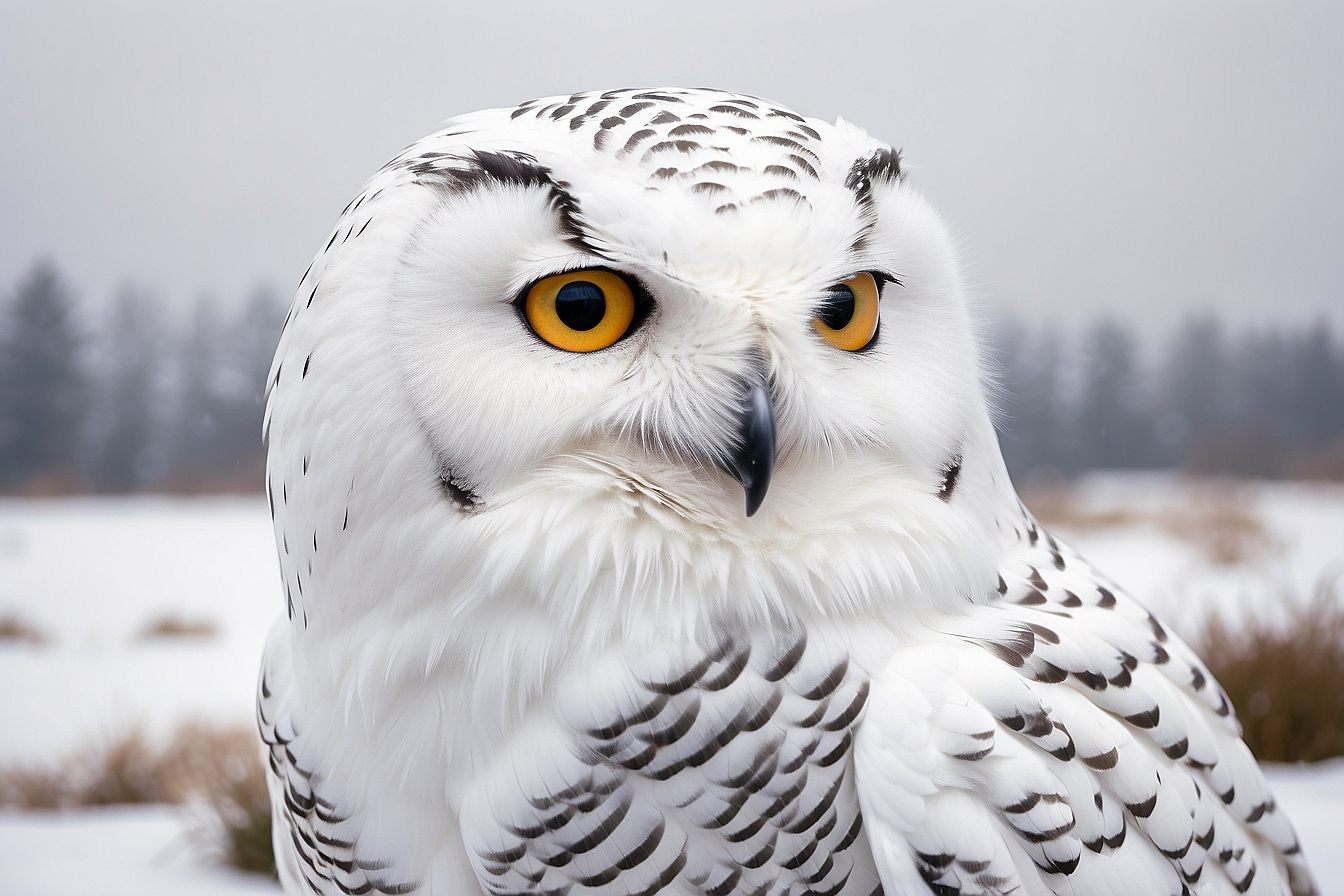
Snowy owls are often found perched on man-made structures such as fence posts, telephone poles, and hay bales, scanning the ground for prey. Their white feathers blend seamlessly with snowy landscapes, making them challenging to spot even though they are among the largest owls in North America.
Snowy owls are one of the largest owl species in the world, particularly when it comes to weight. Here are some details about their size:
- Height: Snowy owls stand about 50 to 70 centimeters (19.7 to 27.6 inches) tall.
- Wingspan: Their wingspan ranges from 125 to 150 centimeters (4.1 to 5 feet), making them impressive fliers.
- Weight:
- Females: Typically heavier, weighing around 1.6 to 3 kilograms (3.5 to 6.6 pounds).
- Males: Slightly lighter, ranging from 1.4 to 2.5 kilograms (3.1 to 5.5 pounds).
- Females are larger than males and have more prominent dark markings or spots across their white feathers.
- Males are usually smaller and much whiter, especially as they age, sometimes appearing almost completely white.

Female snowy owls, with their dark markings, are slightly easier to identify than the predominantly white males. Sunny days provide the best conditions for spotting snowy owls, as the sunlight often encourages them to perch in open areas.

Conservation Challenges and Ethical Birdwatching
Despite their beauty, snowy owls face significant threats. According to The State of Canada’s Birds, snowy owl populations in North America have declined by 56% since 1970. An estimated 15,000 snowy owls remain in North America, with most breeding in Canada. Climate change, habitat loss, and fluctuating lemming populations—a key prey species—are believed to contribute to their decline. Additionally, vehicle collisions pose a serious risk to migrating snowy owls.
To see the eBird map showing where endangered birds have been spotted in Alberta, use this link.
Do you have a photograph of a Snowy Owl in our area ? We’d love to publish it here on the AB Post and tell the world about it. Please visit our Readers Submission page to contact us.